Contents
Helvo founder Julien, explores why Swiss banking was never truly designed for entrepreneurs, and what founders actually need from a modern financial system.
Switzerland is often described as one of the best places in the world to do business. It depends on how you define "best." With more than nine million people, four official languages, and twenty-six cantons each running their own legal framework, Switzerland is a genuinely complex market — small, fragmented, and expensive to navigate. By that measure, it's not obviously the easiest place to start a company.
What Switzerland offers is stability. A stable government, a stable economy, a population that is conservative in the best sense — careful, reliable, open to the world but not reckless with it. This is genuinely valuable, but it is not the same thing as being entrepreneur friendly.
In banking specifically, there's a perception gap that needs to be named clearly. The world associates Swiss banks with excellence, but what it's really associating is the country's stability with the sophistication of wealth management. Those are two different things. With digital banking innovation for businesses, Switzerland has been slow.
Look at what cantonal banks were built to do. They have a mandate to serve their local economy, which is admirable. But that mandate creates a quiet incentive against aggressive digitisation: digitisation means fewer branches, fewer relationship managers, fewer local jobs. The major banks operate with similar inertia for different reasons. The result is no real cross-canton fluidity, no unified digital banking experience for a business operating across the country. Compare that to what's happened elsewhere.
In the United Kingdom, regulators forced the incumbents' hands with Open Banking, and a generation of business-first banks like Tide, Starling, and Revolut Business emerged in the gap. A founder there can incorporate online with Companies House and have a working business account before lunch.
In the United States, Mercury and Brex built banking platforms specifically for early-stage companies: same-day onboarding, integrated cards and spend management, and credit decisions that understand a startup's balance sheet. Stripe Atlas turned incorporation itself into a product. This is not futuristic, founders in London and San Francisco have been operating this way for years. Swiss founders have not.
Switzerland is extraordinary at producing new companies in crypto, medtech, biotech. The talent and the ambition are absolutely there. But in banking, the incumbents chose not to change, and that left a door wide open.
The Nokia and Apple moment is a useful analogy. When the iPhone arrived, Nokia didn't lose because it lacked engineers. It lost because it couldn't imagine a different kind of product. Swiss banking is at that same inflection point. The question is whether the answer comes from a Swiss company that understands this market from the inside, or whether a foreign neobank walks in and takes the opportunity.
Julien Barbotin-Larrieu Co-founder & CEO
The system is working, just not for founders
Look at the Swiss banking landscape honestly and the issue stops looking like a tooling problem. The tooling is just the visible symptom. Underneath it sits something more fundamental: the incentives of the system were never aligned with founders in the first place.
Banks make money on complexity, on relationships, on inertia. A fiduciaire who manually handles your VAT every quarter has no rational reason to automate themselves out of that work. The cantonal mandate, the wealth-management orientation, the slow pace of digitisation — none of it is an accident or a failure. The system isn't broken. It's working exactly as it was designed. Just not for entrepreneurs.
The visible result is everywhere if you know how to look. Most entrepreneurs I know operate with three to five bank accounts… not because they want them, but because they're afraid of losing access to any single one. They've learned that any relationship can be terminated with a month's notice, so they hedge. They open backups. They keep the cash flowing through whichever account hasn't been flagged this quarter. At some point, you stop asking why it's so hard and just quietly build redundancy into everything.
What founders really talk about
Entrepreneurship runs in my family. My mother always had that drive. My wife has it too, that instinct to create something new, something that moves people. I've watched people I love navigate this journey up close, across different industries and different moments in their lives.
When founders sit down at dinner or at a family gathering, the conversation is about the wins. The first big customer. The hire that changed everything. The moment a product clicked with the market. That's what gets shared, and rightly so, those are the moments worth celebrating.
What you don't hear at the table is what keeps them up at three in the morning. The VAT filing they haven't started. The reconciliation that hasn't matched in two months. The fiduciaire's email asking for three more documents. The bank that hasn't replied to last week's request. The card that got declined at the wrong moment because some system, somewhere, decided to flag it.
The wins are loud and the admin is silent, but the admin is what's actually wearing founders down. Chronic stress doesn't announce itself; it accumulates. Sleep gets shorter, decisions get worse, and the energy that should be going into the next customer or the next product gets drained by paperwork that nobody, anywhere, is glamorising at a dinner party.
Helvo can't fix your idea. We can't make your market bigger or your competition smaller. What we can do is run the silent half of that conversation for you — the admin, the reconciliations, the chase — so it stops running you. For some founders, that's the difference between burning out and making it.
The wins are loud and the admin is silent.
Julien Barbotin-Larrieu Co-founder & CEO
Why we built Helvo
For me, it started with credit. I'd been looking at how inaccessible financing was for entrepreneurs in Switzerland… not because the money doesn't exist, but because the process is opaque, slow, and completely disconnected from how a small business actually operates. Around the same time, conversations with co-founders and friends took the idea further: not just a credit product, but a system. A financial operating system that would serve the entrepreneur end to end, and that would accumulate enough data over time to make lending decisions that are intelligent. The banking layer isn't the goal, it's the foundation everything else sits on.
What was happening elsewhere in Europe sharpened the conviction. Founders in other markets were already operating on integrated, faster, smarter platforms. Switzerland, which should have been leading this, was watching from the sidelines. That gap felt like both a problem and an opportunity.
The vision is simple. A founder opens their banking platform, requests a credit line, and gets an answer in five minutes. Funds deployed in under twenty-four hours. And if the answer is no, the platform doesn't just reject the request, it shares the KPIs needed to turn that no into a yes. That's what a financial system that actually serves entrepreneurs looks like. Nobody in Switzerland was building it, so we decided to build it ourselves.
The system founders deserve
Starting a business in Switzerland should feel like an act of ambition, not an act of courage. Today, too many founders spend their first months fighting the system just to exist: opening accounts, chasing paperwork, juggling tools that don't talk to each other, paying for services they don't fully understand before they've earned their first franc. That has to change.
If we get this right, a founder incorporates, has a working account within forty-eight hours, and from day one operates on a single platform that runs their banking, invoicing, accounting, and payroll. They see their cashflow in real time. They sleep on Sunday night instead of reconciling receipts. The credit decision they used to wait three weeks for happens in minutes, with clarity attached.
But beyond the product, there's something more fundamental at stake. Time is the only commodity that is truly not for sale. Every hour a founder spends on bank reconciliation, on VAT forms, on chasing their fiduciaire is an hour gone. The purpose of Helvo is to free up that time so founders can chase a new lead, read a book, walk in the mountains, sleep restfully, and have dinner with their family without a spreadsheet open on their phone.
Switzerland has everything it needs to be the best place in the world to build a company: the stability, the talent, the capital, the work ethic. What it has been missing is a financial system that believes in founders as much as founders believe in their ideas. We're building that system. And honestly, it's about time.
About the author
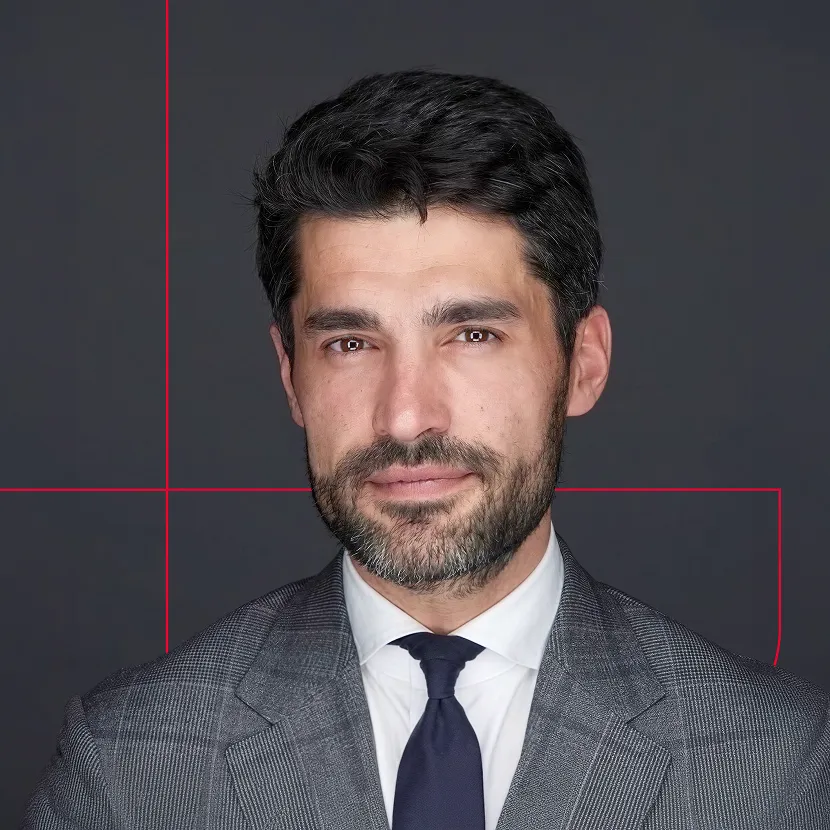
Scaled companies in private equity and strategy for 15+ years. He watched founders lose weekends to spreadsheets and chaos. That's why he built Helvo. Julien brings the founder lens.
Share